
University City City Directory Collections
University City sits within St. Louis County, so a city directory search often needs both St. Louis city books and the county volumes that include local addresses. The strongest starting point is the St. Louis County Library History & Genealogy collection. Its holdings combine directories with maps, newspapers, yearbooks, burial material, microfilm, and local indexes. The runs below are the years documented by the library guide, not a promise of uninterrupted annual publication. Check the exact year in the catalog or on the shelf before drawing a conclusion from a gap.
| Collection | Years | Where Held | Access |
|---|---|---|---|
| St. Louis city directories, early series | 1821; 1840; 1842-1853 and other early years | SLCL History & Genealogy | Microfiche or print, with format varying by year |
| St. Louis city directories, continuing series | 1864-1942, mostly microfilm | SLCL History & Genealogy | Library research; inspect individual reels for gaps |
| St. Louis city directories, later listed runs | 1947-48; 1952; 1955-66; 1967-68; 1969-75; 1976-77; 1980 | SLCL History & Genealogy | Print or microfilm by year |
| St. Louis County directories | 1893-1979 in listed runs | SLCL print, microfilm, and County Directories collection | Free online search or browse where digitized |
| Missouri Digital Heritage city directories and Blue Books | 1872-1900 | Missouri Digital Heritage | Text and image route when indexing supports it |
The library guide separates city series, business directories, county directories, and telephone books. Business volumes for 1902-07, 1911-16, and 1918-28 identify firms and principals, so they should not be read as a full residential roll. White and yellow pages are held for some years from 1968 through 2014, again with gaps. A city directory can be a useful historical snapshot, but its presence or absence does not prove present-day occupancy.
University City Directory Runs at SLCL
The SLCL Missouri, St. Louis City and County holdings guide is the best year-by-year locator. It distinguishes the format of the item and notes library call numbers rather than treating all books as one series. County directory call numbers listed there include R 917.7865 S145, P769, and A694. That distinction matters when a University City address is not found in a city volume. A county directory may cover the relevant period even where the city sequence does not.
For help with a narrow question, the History & Genealogy room is at 1640 South Lindbergh Boulevard, St. Louis, Missouri 63131. The contact number is 314-994-3300, extension 2070, and the research contact is genealogy@slcl.org. The library also offers a limited lookup request. Give the staff the person’s name, a probable year, and an address or page clue when possible. The request service is a targeted fallback, not a substitute for an open-ended search across every volume.
University City Directory Search Methods
The free St. Louis County Directories collection lets a researcher choose a year and search a name or, in supported volumes, part of an address. It is a fast first pass for a former University City resident. It is not the final step. The library specifically cautions that a surname can be read incorrectly by OCR, and an address may fail as a text search even when the printed page contains it. When a search returns nothing, browse the alphabetic pages and then any street-order portion of the volume.
A 1938 example on the collection illustrates why page browsing still matters. Initials, punctuation, abbreviated streets, and scan quality can separate an actual entry from a failed text match. Search the surname alone, try a short distinctive portion of the address, and check nearby spellings. Use the printed page as the source of record, not the search-result snippet. The same care applies to the 1872-1900 Missouri Digital Heritage material, where name, address, occupation, and date searching depend on the quality of indexing.
The digitized County Directories search shows the year controls that make this first pass practical.
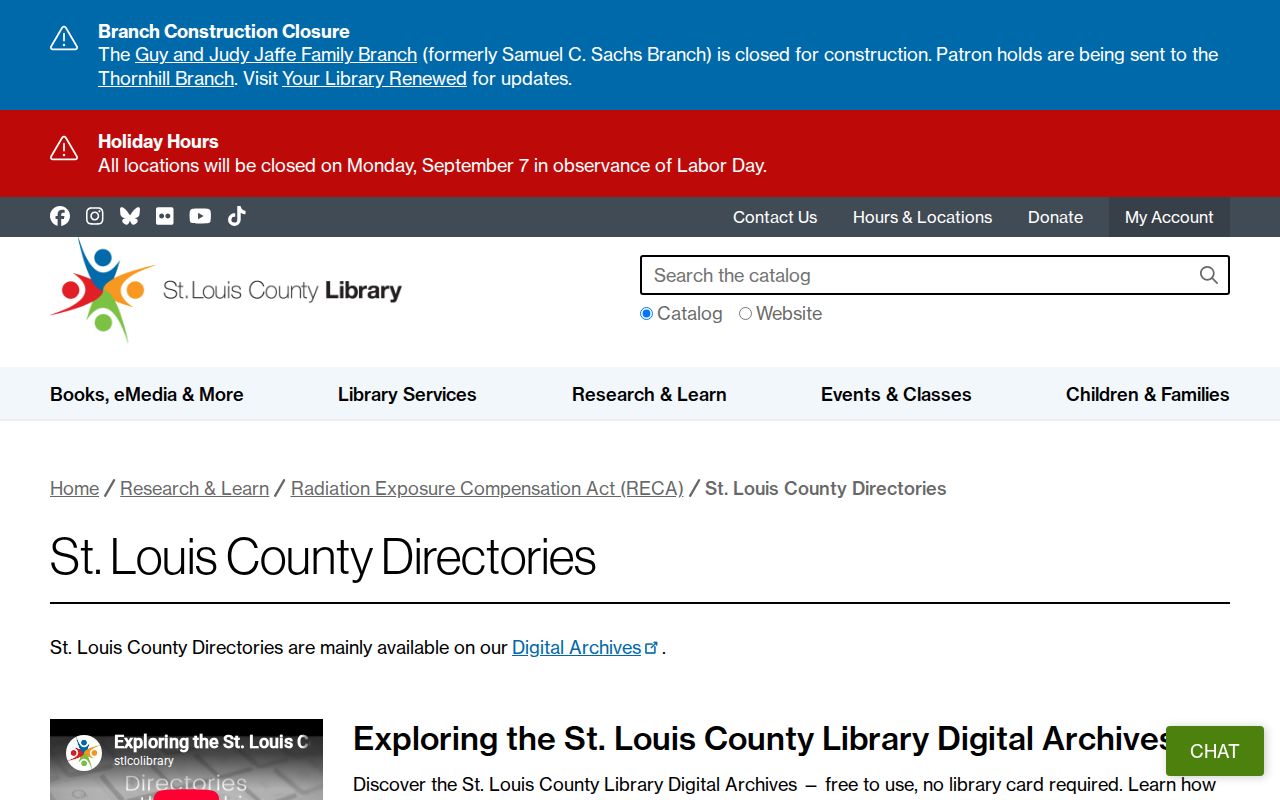
Use a result to reach the scanned page, then record the volume year and page before moving to the prior or following directory.
Reading University City City Directory Entries
A University City city directory entry is an editorial listing tied to a publication year. It may show a surname and given name, a spouse or other relation in parentheses, an occupation or business line, a street address, and a telephone number in later books. Some publishers used marks for ownership, occupancy, or widowhood. The meaning of a mark can change by publisher and year, so read the front matter before assigning meaning to “r,” “h,” “wid,” an occupation initial, or a telephone exchange.
| Printed name | Transcribe surname, given name, initials, and any relationship notation exactly as printed. |
|---|---|
| Street address | Record the house number and street spelling, including abbreviations that may differ from a modern form. |
| Occupation or business line | A historical context clue that may name a trade, firm, or business address. |
| Telephone detail | Later volumes can carry a number or exchange that helps separate people with similar names. |
| Symbol or notation | Check the volume’s own key before interpreting owner, residence, boarding, or widow notation. |
| Citation detail | Keep directory year, volume, page, and the abbreviation key with the transcription. |
- Criss-cross directory
- A street-order portion of a directory that can place listings by address rather than surname, if that volume includes one.
- Householder index
- An index organized around the named household or principal, useful for finding the listing before checking related people or addresses.
- Abbreviation key
- The publisher’s legend, often near the front of the book, which explains the symbols and shortened terms used in that volume.
Note: A directory entry places someone in a printed record for that period; it is not proof of a current address.
University City Directory Index Leads
University City also has a local-history index that supplies a different kind of lead. The University City local-history index covers James Lumpp’s 1930 book, University City: Its History and Dedication of New City Hall. Its results identify a last name, first name or initial, page number, and photo reference where applicable. That structure can locate a civic figure, a photograph, or a relevant page much faster than turning every page of the book.
The index is not a standard city directory and cannot establish a full street address by itself. It is especially useful as an initials check. A person found only as an initial in a directory can sometimes be matched to a first name, page, or photograph reference in the Lumpp index. The lookup route permits up to three searches, so a request is strongest when it names the person and includes the best known subject or page clue. Treat the result as context that must be paired with a directory, census, deed, obituary, or another dated source.
University City Household Tracing
Trace a University City household in close sequence rather than jumping from one distant year to another. The address is often the most stable thread when a name is abbreviated, a spouse is listed, or a widow notation appears. Compare the city directory with a county directory for the same era when both exist. Then pair the directory date with the nearest public federal census schedule. The 1950 schedule is available through the National Archives; individual schedules after 1950 remain closed under the 72-year access rule.
- Start with the directory year closest to the target date and search the surname alphabetically.
- Copy every variant: initials, middle names, spouse notation, street abbreviation, exchange, and any publisher symbol.
- Move one listed directory year forward and backward, noting an address change, a changed relation, or an absence.
- Check the criss-cross or street-order section when present to compare the address and nearby listings.
- Pair the result with the closest census schedule, remembering that a publication date is not necessarily the canvass date.
- Use obituary indexes, burial material, county tax ownership, recorded deeds, or probate names only to test a dated lead.
A disappearance can mean a move, a death, an omitted listing, a changed name, or a directory gap. It does not have one automatic explanation. A spouse’s given name, a neighboring address, and a telephone detail can separate two similarly named people. For a street-by-street address chain after the historical listing is identified, use the University City streets directory.
University City Directory Years Timeline
The documented runs form a useful timeline, but not a continuous one. The point of the timeline is to show where a search can begin, where another record type must fill a gap, and why a missing year should be checked rather than assumed.
- 1821-1853: Early St. Louis city material survives in microfiche or print for listed years, including the 1821 microfiche and 1840 print.
- 1864-1942: The later city sequence is mostly microfilm and appears broad, though individual gaps still need checking.
- 1872-1900: Missouri Digital Heritage adds a searchable city-directory and Blue Book route.
- 1893-1979: Listed St. Louis County directory runs provide another University City path in print, microfilm, and digitized form.
- 1947-1980: Later city volumes are documented in separate runs, so a missing year should not be inferred from adjacent listings.
The library guide’s last listed city-directory year is 1980. That establishes the last year documented in that inspected guide, not that every later directory ceased to exist. The physical holdings and catalog remain the right place to confirm a specific year.
University City Directory Companions
City directories become more reliable when read with nearby collections from the same library room. SLCL has St. Louis newspapers, yearbooks, maps and atlases, cemetery and burial material, local court-book transcriptions, plat books, and newspaper indexes. A directory address can be tested against a map or plat; an unexplained absence can be checked in a death or obituary index. The library’s digital archive is available through SLCL Recollect, while the University City Historical Society can provide local context for a home, building, institution, or civic figure.
SLCL’s History & Genealogy collection is the central shelf for these related sources and its limited research-request option.
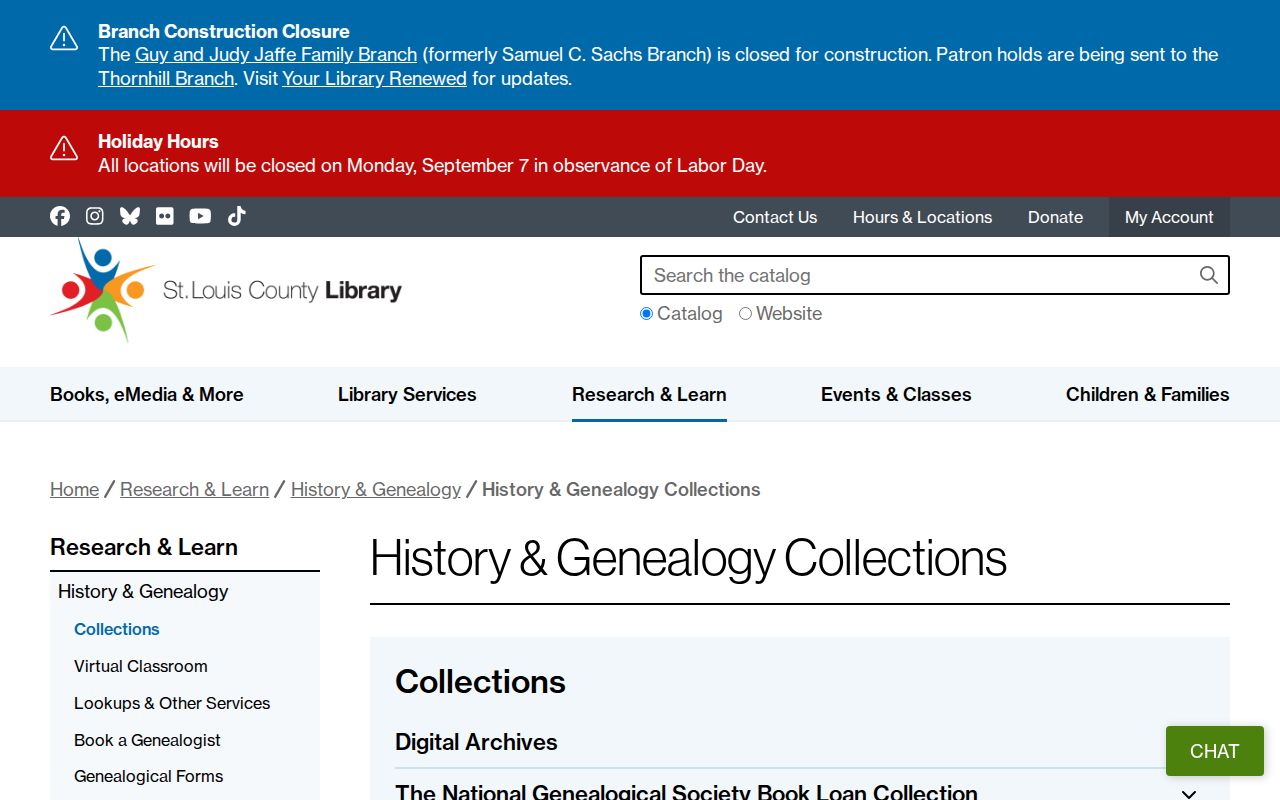
The collection’s mix of directories, maps, microfilm, newspapers, yearbooks, and lookup support helps turn one printed listing into a checked historical record.
University City City Directory Limits
Directory books do not name every person who lived in University City, and their coverage varies by publisher, period, and type of listing. A telephone-book listing may identify a subscriber rather than each household member. A business directory answers a different question from a residential book. OCR errors and missing annual volumes can hide an entry that still exists in print. Search first, browse when the result seems doubtful, and preserve the exact printed wording rather than modernizing it.
Use historical directory material for family history, local research, or a house timeline. Do not use it to pursue, harass, or harm anyone. When a record matters, compare the original scan or volume and the office or library that holds it. Note: The most dependable conclusion comes from several dated records that agree, not from one isolated city-directory line.